

Storage Units
1. Facility-Specific Access & Navigation
Moving into storage in the Central Park area requires a deep understanding of local constraints. Whether you are utilizing a facility along the Hwy 12 corridor in Elma or a more rural site nestled near the Central Park residential grids, our crews plan every detail based on:
• Gate & Maneuverability Audits: Many facilities in the harbor, such as those near Schouweiler Road, feature tight 90-degree turns and narrow drive-aisles. We deploy our smaller 20-foot straight trucks for sites with limited turn-around space, ensuring we don't block main arterial roads or get stuck in restrictive gate entries.
• Elevation & Climate Risks: We account for the high humidity and specific moisture levels of the Chehalis River Valley lowlands. To protect your assets, we never stack items directly against exterior facility walls where condensation is most likely to form during the damp Pacific Northwest winters.
3. Regional-Specific Loading Standards
We utilize a "Central Park Buffer" loading technique to protect your items from the unique regional climate and local terrain of the Grays Harbor area:
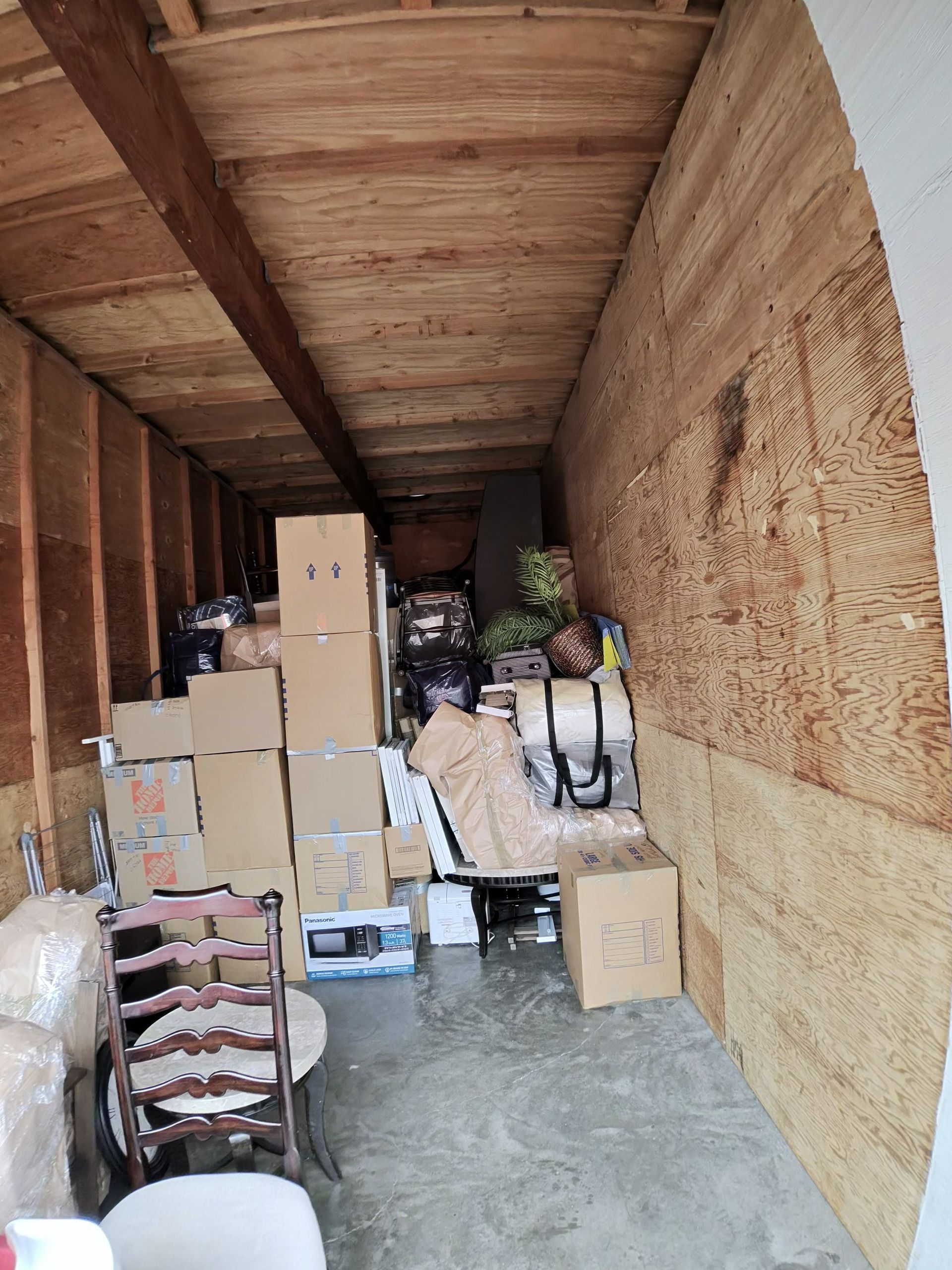
• The Humidity Perimeter: We leave a 2-inch gap between your stored items and the exterior metal walls of the unit. This creates a critical airflow channel that prevents mold growth—a common issue in local units near the Chehalis and Wynoochee Rivers, where moisture levels are consistently higher.
• Road-Vibration Anchoring: Even for a short move into storage, we strap large furniture to the interior framing of the unit or utilize heavy-duty floor bracing. This ensures that if you are storing items in a facility with high vehicle traffic or near the Hwy 12 corridor, your stacks won't shift or lean over time due to ground vibration.
Neighborhood-Specific Coordination
We map our approach based on your starting point in Central Park to ensure a smooth transition to your storage facility:
• Central Park East/Commercial Corridors: We schedule pickups during non-peak retail hours—specifically avoiding the morning and afternoon school traffic near Central Park Elementary—to ensure we can load your items without blocking commercial access or residential flow.
• Rural/Acreage Routes: If we are picking up from a residence off a long, winding dirt or gravel road common in the outer reaches of Grays Harbor, we switch to our 4WD-equipped support vehicles for the "first mile" of the move before transferring to the primary storage haul truck.
• Inventory Manifesting: You receive a map of the unit’s contents marked by specific zones (A, B, C, D) corresponding to your home's original floor plan. This means when you go to retrieve your "Winter Gear" or "Holiday Decor" from the unit, you know exactly which zone to head to without pulling everything out.
The AMC Commitment to Central Park
We don't treat this as a simple "drop-off." We treat your storage unit as a secondary, climate-conscious extension of your home. We are the only local mover that audits your facility’s specific drainage and airflow before we sign off on your move-in.